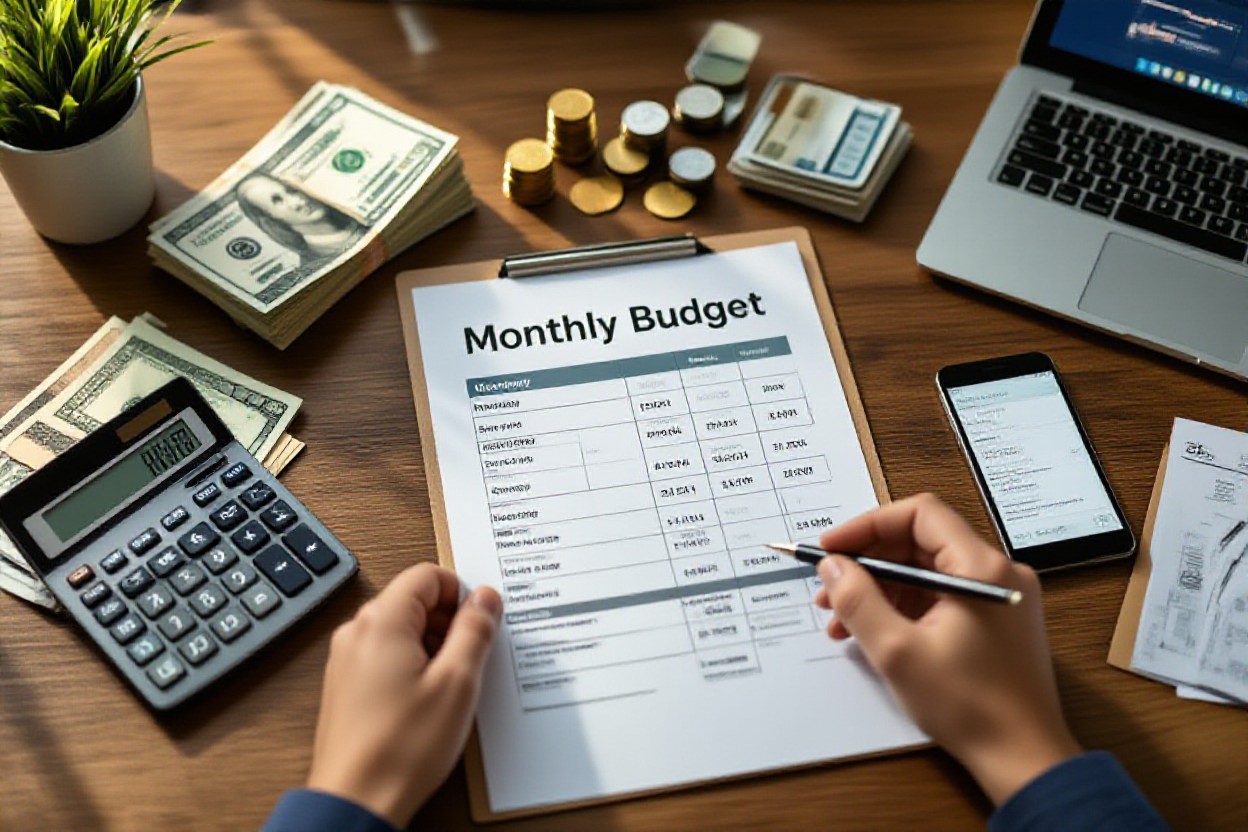
How Much of Your Income Should Be Planned Every Month?
Over the course of a month, allocate at least 50-70% of your income to imperative needs, 10-20% to savings and debt repayment, and 10-30% to discretionary spending to maintain balance and build resilience; adjust these ranges based on your goals, fixed obligations, and emergency fund status so you can track progress, avoid lifestyle inflation, and ensure you meet short- and long-term financial priorities.
Understanding Income Allocation
For clear income allocation, you should divide your monthly earnings into necessarys, discretionary spending, savings, and debt repayment, assign percentage targets that match your goals, and adjust allocations as income or priorities change to keep your finances aligned with your plans.
Fixed vs. Variable Expenses
Across your budget, separate fixed expenses-rent, insurance, loan payments-that rarely change from variable expenses like groceries, utilities, and entertainment; you can more easily trim variable costs to free up money for savings or debt reduction when needed.
The Importance of Emergency Funds
With an emergency fund covering three to six months of necessarys, you protect your budget from income shocks, avoid high-interest borrowing, and preserve progress toward long-term goals by funding it through small, regular transfers until you reach your target.
Emergency funds should be liquid and accessible-kept in a high-yield savings or money-market account-sized to your household needs, job stability, and monthly obligations; you should use it only for true emergencies and replenish any withdrawals promptly.
Essential Budgeting Strategies
One effective approach to planning your monthly income is to combine clear goals, automated savings, and regular expense reviews so you control your cash flow, adjust to changes, and align spending with priorities.
The 50/30/20 Rule
Rule divides your after-tax income into needs (50%), wants (30%), and savings/debt repayment (20%), giving you a simple framework to prioritize your spending and grow your financial cushion.
Zero-Based Budgeting
The zero-based method assigns every dollar of your income a job-expenses, savings, and debt payments-so your income minus outflows equals zero, forcing you to make intentional choices and reduce passive spending.
Strategies for implementing zero-based budgeting include allocating income to specific categories each month, creating a small buffer for irregular costs, tracking every transaction so you can reassign dollars as needs shift, and conducting a monthly review to keep your plan aligned with your goals.
Factors Influencing Income Planning
You evaluate income planning by balancing fixed obligations, variable expenses, savings targets, and risk tolerance; prioritize these elements when deciding monthly allocations.
- Fixed costs: rent, loans, utilities
- Variable spending: groceries, transport, entertainment
- Savings & investments: emergency fund, retirement, education
- Life changes: family growth, relocation, health needs
- Risk management: insurance, debt levels
Any change in one area should prompt you to revisit allocations to preserve financial stability and goal progress.
Lifestyle Choices
Above your lifestyle choices-housing, dining, travel, hobbies, and wellness-directly shape how much discretionary income you can allocate, so you must align spending with values to sustain both enjoyment and saving goals.
Future Financial Goals
To meet future goals like homeownership, education funding, or early retirement you convert targets into monthly contributions, prioritize objectives, and set timelines so your income planning steadily advances each aim.
Further, you break long-term goals into milestones, monitor progress monthly, increase contributions as income grows, and adjust priorities after life events so your plan remains realistic and effective.
Tools for Effective Money Management
All the right tools help you turn financial intentions into consistent habits by giving clear visibility and control over your cash flow; you can combine automatic transfers, budgeting apps, spreadsheets, and simple envelope systems to track income, allocate savings, and limit discretionary spending so your monthly plan stays aligned with your goals.
Budgeting Apps
Below, budgeting apps provide real-time account syncing, automated categorization, spending alerts, and goal tracking so you can monitor progress without manual entry; pick an app that matches your privacy comfort and feature needs, set budgets and notifications, and review summaries weekly to fine-tune your allocations.
Spreadsheets and Manual Tracking
Along with apps, spreadsheets and manual tracking give you full control to customize categories, run scenarios, and see trends; by entering transactions or using linked CSVs you force attention to each expense, letting you detect patterns and adjust your monthly plan more precisely.
The flexibility of spreadsheets lets you build tailored templates, create cash-flow projections, and test “what-if” scenarios; set a regular update routine, use formulas and conditional formatting to flag overspending, and keep backups so your data supports disciplined monthly planning.
Common Budgeting Mistakes to Avoid
Once again you must review how much of your income needs active planning each month; common pitfalls like irregular expenses, failure to adjust for life changes, rigid categories, and treating budgets as one-time tasks can derail even disciplined financial plans.
Underestimating Expenses
Above all you should avoid lowballing regular costs and ignoring seasonal bills; underestimating expenses forces you to rely on credit or emergency funds, so pad estimates, track variable spending, and update projections monthly.
Ignoring Savings and Investments
After covering imperatives, you must allocate for savings and investments rather than treating them as leftovers; neglecting these prevents compounding growth and leaves you exposed to long-term shortfalls.
In fact you should automate savings, set target percentages (for example 10-20%), prioritize an emergency fund before aggressive investing, and review allocations quarterly so your savings and investments grow predictably with your goals.
Adjusting Your Plan Over Time
Unlike static budgets, your monthly plan must evolve with changing goals, income, and expenses; you should review allocations, shift funds between crucials, wants, and savings, and set checkpoints so small adjustments keep you on track without derailing long-term objectives.
Regular Budget Reviews
After each month you should compare actual spending to your targets, identify variances, and update next month’s allocations to address overspending or accelerate savings, using brief, consistent reviews to maintain control without overcomplicating the process.
Adapting to Life Changes
About major life events-new job, move, family addition, or unexpected expenses-you should reassess priorities, adjust emergency buffers, and reallocate contributions so your budget reflects new realities while still progressing toward long-term goals.
This is how you should respond: when your income rises or falls, when you face one-time costs, or when priorities shift, you should recalculate cash flow, reset short-term targets like your emergency fund or debt paydown, trim discretionary spending if needed, and automate new contribution levels so you adapt quickly and preserve momentum.
To wrap up
Hence you should plan the majority of your monthly take-home pay into defined buckets: about 50% for necessarys, 20% toward savings and debt repayment, and 20-30% for discretionary spending and goals, plus a small buffer for irregular costs. Automate allocations, review monthly, and adjust as your income or objectives change to keep your finances aligned with your priorities.