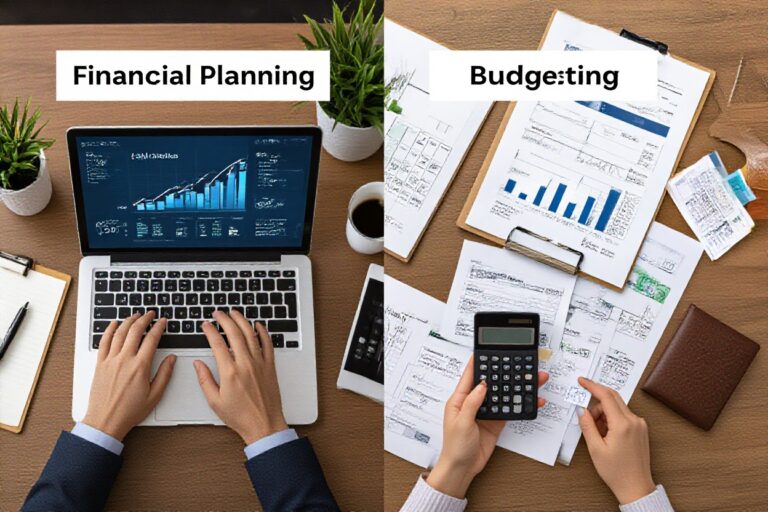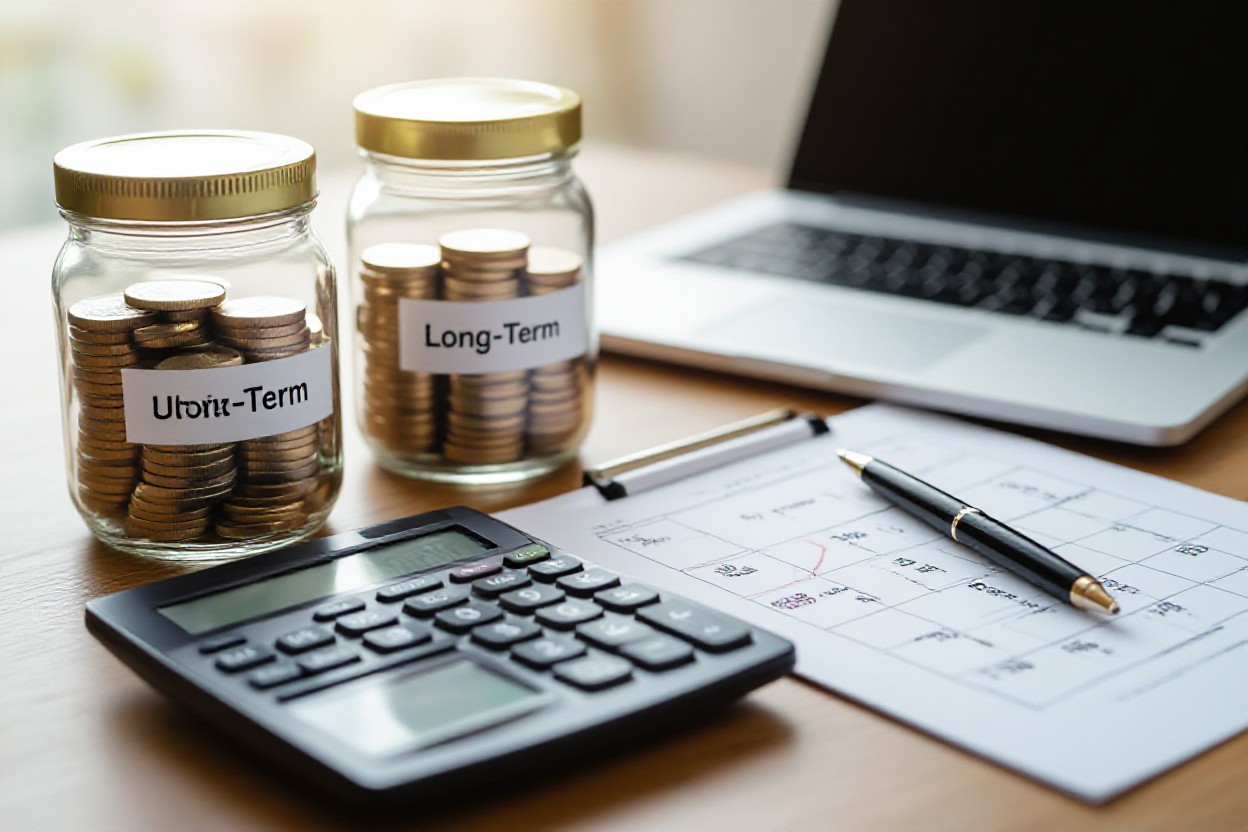
How Do You Plan Finances for Short Term and Long Term Together?
You build your balanced financial plan by aligning short-term needs-emergency fund, debt management, and savings goals-with long-term objectives like retirement and investments; prioritize liquidity, risk tolerance, and time horizon, set measurable milestones, automate contributions, review progress annually, and adjust allocations to fund both horizons without compromising either.
Understanding Short-Term Financial Needs
Your short-term financial needs cover expenses and obligations you expect within the next few months to three years; you should prioritize an emergency fund, routine bills, planned purchases and short-term debt payments so you avoid tapping long-term investments or incurring high-interest borrowing.
Definition of Short-Term Goals
Goals labeled short-term typically have timelines up to one to three years and include building an emergency cushion, funding planned travel, replacing a vehicle, saving for small home repairs, or paying off short-term debts; you prioritize liquidity and low volatility for these targets.
Importance of Liquidity
Importance of liquidity is that it gives you immediate access to cash when bills, emergencies or opportunities arise, helping you avoid selling long-term assets at a loss and maintain financial flexibility while supporting steady cash flow.
Further, you should size an emergency fund (commonly three to six months of vital expenses), keep a portion in high-yield savings or money-market accounts, consider short-term CDs or a ladder for slightly higher returns without sacrificing access, and avoid locking all short-term reserves into illiquid investments.
Exploring Long-Term Financial Goals
Clearly you need a roadmap for objectives like retirement, homeownership, and legacy planning; define timelines, prioritize goals by impact, quantify targets, and align investments and risk tolerance so your long-term plan guides decisions today and adapts as your income and circumstances change.
Definition of Long-Term Goals
Among the targets you set for ten years or more-such as retirement income, paying off a mortgage, or funding a child’s education-you should specify amounts, dates, and acceptable risk so you can choose the savings vehicles and investment mix that will realistically achieve those aims.
Strategies for Long-Term Savings
Among your best strategies are diversified investing, tax-advantaged accounts, automated contributions, periodic rebalancing, and increasing contributions as your earnings grow; these build compound returns and protect purchasing power against inflation so your future goals stay attainable.
Consequently you should set a consistent allocation between equities for growth and bonds for stability, ladder tax-advantaged and taxable accounts, use dollar-cost averaging, monitor fees and tax implications, and revisit allocations after major life events so your strategy stays aligned with your evolving priorities and risk tolerance.
Balancing Short-Term and Long-Term Objectives
The best way to balance short- and long-term objectives is to align allocations with timelines: secure your emergency cushion and near-term needs, reduce high-interest debt, then direct consistent contributions toward retirement and growth investments; schedule regular reviews so you can shift funds as life changes and opportunities arise.
Prioritizing Financial Goals
Goals should be ranked by urgency, impact, and liquidity: address necessarys like housing and safety nets, tackle high-interest liabilities, then fund medium- and long-term aims; assign target dates and measurable milestones so you can track progress and adjust priorities when circumstances change.
Creating a Flexible Budget
Prioritizing adaptability in your budget means setting core allocations for necessarys, savings, and investments while keeping variable percentages for opportunities and lifestyle; automate transfers, cap discretionary spending, and allow monthly adjustments so your plan supports both short-term needs and long-term wealth building.
But you should review and tweak allocations monthly or after major life events, use buckets (emergency, short-term, retirement), set percentage ranges rather than fixed amounts, rebalance when one bucket outgrows others, and keep your emergency fund liquid so short-term needs don’t force you to sell long-term investments.
Investment Strategies for Mixed Timeframes
Now you should structure a blended plan that balances liquidity for near-term needs with growth for distant goals, using tiered allocations, emergency funds, laddered instruments, and periodic rebalancing to keep risk aligned with time horizons and tax considerations.
Short-Term Investment Options
After you set your emergency cushion, prioritize high-yield savings, money market accounts, short-term CDs, Treasury bills, and ultra-short bond funds to preserve capital while earning modest returns, matching instrument duration to specific short-term cash needs and liquidity requirements.
Long-Term Investment Vehicles
On your long horizon, favor diversified equity ETFs, index funds, growth-oriented mutual funds, tax-advantaged retirement accounts, and a mix of intermediate bonds to harness compounding while managing volatility through appropriate asset allocation based on your risk tolerance.
To optimize long-term outcomes, use dollar-cost averaging, consider target-date or lifecycle funds for simplicity, diversify across sectors and geographies, prioritize tax-efficient vehicles and withdrawal strategies, and review allocations periodically to adjust for life changes and shifting goals.
The Role of Emergency Funds
After you set short- and long-term goals, your emergency fund acts as a financial buffer that prevents you from derailing plans when unexpected expenses arise. You should aim to cover 3-6 months of vital expenses, adjust the amount for job stability and dependents, and treat the fund as a top priority in budgeting and saving.
Importance of an Emergency Fund
Along with protecting your savings, an emergency fund gives you negotiation power and reduces reliance on high-interest debt when income gaps occur. You will maintain financial momentum on long-term investments while handling short-term shocks, preserving credit and lowering stress so you can pursue goals with greater confidence.
How to Build and Maintain One
One practical approach is to automate transfers to a separate, liquid account; you can start with a modest target-such as one month’s expenses-and scale up to three to six months as stability improves. Review contributions after major life changes and replenish the fund immediately after withdrawals.
For instance, if you face an unexpected car repair, tapping your emergency fund lets you avoid credit card debt and keeps your investment plan intact; set alerts, keep the account accessible but not too convenient, and perform an annual audit to ensure the balance matches your current cost of living.
Tools and Resources for Financial Planning
To align short- and long-term goals, you should use a mix of budgeting apps, investment platforms, retirement calculators and insurance reviews that let you model scenarios, automate savings, track progress and adjust allocations as life changes; prioritize tools that sync accounts, visualize cash flow and provide alerts so you can act promptly.
Financial Planning Software
Before choosing software, you should list necessary features – budgeting, cash-flow forecasting, multi-account sync, goal-setting and tax projections – test free trials, confirm security protocols and ensure mobile access so the tool integrates with your workflow and helps you balance liquidity, debt repayment and investing.
Professional Advisors and Resources
After you assemble tech tools, you should consult advisors – fee-only planners, tax professionals, estate attorneys – to validate assumptions, optimize tax strategies, and tailor plans for major milestones; ask for credentials, fee structures and how they coordinate with your software so advice fits your long- and short-term priorities.
Due to varying specializations and fee structures, you should vet advisors by checking certifications (CFP, CPA), compensation models, fiduciary duty and client reviews; combine a certified planner for strategy, a CPA for taxes and an attorney for estate matters, and require secure communication so your team coordinates effectively.
Summing up
Summing up, align your short- and long-term finances by setting clear goals, building an emergency fund, automating savings and debt payments, allocating assets by time horizon, and reviewing your plan regularly; balance liquidity for near needs with disciplined investing for growth so you ensure immediate stability supports long-term wealth.