What Comes First Saving Investing or Debt Repayment?
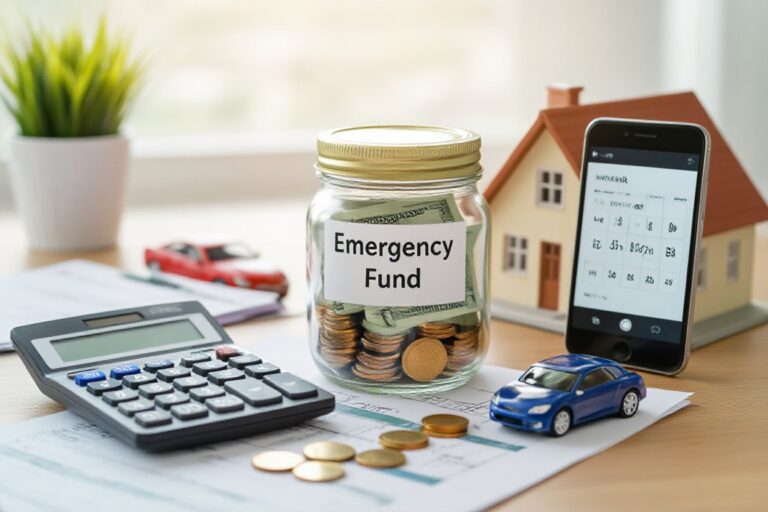
It’s understandable to feel torn between building savings, investing, and paying down debt, but you should first secure a small emergency fund, then aggressively tackle high-interest debt while contributing to employer-matched retirement plans; once high-rate obligations are controlled, shift more toward diversified investing and growing your long-term savings to meet goals and reduce financial risk.
Understanding Personal Finances
A solid understanding of personal finances helps you prioritize saving, investing, and debt repayment by clarifying your income, expenses, and goals so you can make decisions that reduce risk and build long-term wealth.
The Importance of Financial Literacy
Before you commit to a strategy, financial literacy lets you interpret interest rates, taxes, and risk; when you grasp compounding and inflation you can evaluate trade-offs and choose actions that align with your goals.
Key Components of Personal Finances
Behind every effective plan are income management, budgeting, emergency savings, debt strategy, insurance, and investing; you should evaluate each to ensure cash flow stability, protection from shocks, and progress toward wealth.
Personal attention to budgeting frees funds for saving or debt repayment, emergency savings prevent high-cost borrowing, insurance limits large losses, a clear debt strategy targets high-interest balances, and investing uses compounding-together these components give you the flexibility to shift between saving, investing, or repaying debt as your circumstances change.
The Role of Saving
It anchors your financial plan by providing stability, funding near-term goals, and preventing you from tapping investments or taking on high-interest debt; you should set clear targets, automate contributions, and shift priorities as your income, obligations, and goals evolve.
Emergency Funds
On building an emergency fund you should aim for 3-6 months of crucial expenses to cover job loss, medical bills, or urgent repairs; keep this money in liquid, low-risk accounts separate from investments so you can access cash quickly without disrupting long-term strategies.
Short-term vs Long-term Savings
Shortterm savings are for goals within 1-3 years, so you prioritize liquidity and capital preservation, while long-term savings target retirement or major future purchases and can tolerate market volatility for higher returns; align vehicles and risk with each timeline.
Understanding how to allocate: use high-yield savings, money markets, or short-term CDs for immediate needs, and diversify long-term holdings across stocks, bonds, and tax-advantaged accounts like IRAs and 401(k)s; adjust risk exposure as goals near and employ dollar-cost averaging to smooth market entry.
Investing Fundamentals
One foundation of investing is aligning your time horizon, goals and risk tolerance so you can choose vehicles that support your objectives; you should build an emergency fund first, then deploy diversified holdings to pursue growth without exposing your core needs to undue volatility.
Types of Investments
Along with cash reserves, you can allocate to several asset types to match goals and risk:
- Stocks – growth potential with higher volatility
- Bonds – income and lower volatility
- ETFs/Mutual funds – broad diversification
- Cash equivalents – liquidity for short-term needs
Recognizing you should balance allocation across these to meet return targets while limiting downside.
| Type | Typical Role |
|---|---|
| Stocks | Long-term growth |
| Bonds | Income and capital preservation |
| ETFs/Mutual Funds | Instant diversification |
| Cash Equivalents | Liquidity and emergency use |
Risk and Return Considerations
At the heart of portfolio design is the trade-off between expected return and volatility; you should evaluate how much short-term fluctuation you can tolerate and set allocations that reflect your objectives, rebalancing periodically to maintain your target risk profile.
Considering your time horizon, diversification and position sizing helps manage risk: you spread exposure across uncorrelated assets, use fixed income or cash to dampen swings, and increase equity exposure as your timeline lengthens to pursue higher expected returns.
Debt Repayment Strategies
Despite having multiple financial goals, you should establish a small emergency cushion while aggressively reducing debt; pick a plan that balances interest savings and behavioral wins, automate payments, negotiate rates where possible, and reallocate freed cash toward higher-priority goals as balances fall.
Prioritizing High-Interest Debt
Against other priorities, you should target high-interest debt first because it erodes your cash flow fastest; direct extra payments to those balances, maintain minimums on lower-rate accounts, and consider consolidation or rate reductions to lower your total interest burden.
Debt Snowball vs. Debt Avalanche Methods
One method focuses on paying smallest balances first for quick psychological wins (snowball), while the other targets highest-interest debts to minimize cost (avalanche); you should choose the approach that best sustains your discipline and progress.
Hence, if you need momentum choose snowball to build confidence, whereas if you can stick to a plan and prefer math-based savings choose avalanche; you can also hybridize-attack a few small debts for morale, then switch to avalanche-tracking progress monthly to stay on course.
The Interplay Between Saving, Investing, and Debt
After you establish a small emergency buffer, your saving, investing, and debt choices interact: savings provide liquidity, investing drives long-term growth, and debt repayment lowers interest drag. You should compare interest rates, time horizon, tax effects, and cash-flow needs to sequence actions that increase your net worth while reducing financial stress.
Balancing Acts: When to Save, Invest, or Repay
Among your priorities, set a starter emergency fund, then attack high-interest debt while making modest investment contributions; if debt interest is lower than expected after-tax investment returns, shift toward investing. You should weigh rate comparisons, timeline, and volatility tolerance to allocate between saving, investing, and repayment as life changes.
Real-life Scenarios and Case Studies
With concrete examples you can see trade-offs: a 20% credit-card balance versus a 7% expected market return argues for repayment, while a 3% mortgage versus a 7% long-term return may justify investing more; your horizon, emergency needs, and certainty shape the optimal path.
- Case 1 – High-rate card: You owe $5,000 at 20% APR. Annual interest ≈ $1,000; a 7% investment on $5,000 yields ~$350 in year one → prioritize repayment to save ≈$650/year in net cost.
- Case 2 – Student loan: You owe $25,000 at 4.5% (annual interest ≈ $1,125). Investing $5,000/year at 7% for 10 years grows to ≈$69,000; balancing extra payments and investments depends on your risk tolerance and employer match.
- Case 3 – Mortgage vs investing: You have a $200,000 mortgage at 3% (first-year interest ≈ $6,000). Investing $10,000/year at 7% for 20 years grows to ≈$410,000, so investing more can outpace low-rate mortgage costs if you keep sufficient emergency savings.
- Case 4 – Mixed profile: You hold $3,000 emergency, $15,000 student loan at 5%, and $8,000 taxable investments averaging 6%; with 3-6 months saved, allocate surplus toward >5% debt then split new contributions (e.g., 60% invest / 40% repay).
Hence you can apply these case studies to your own numbers: run simple simulations comparing your debt rates to expected after-tax investment returns, factor in employer matches, and adjust for liquidity needs; the examples below map common life stages to pragmatic allocations.
- Early-career: Salary $50,000, emergency $1,000, student loan $30,000 @6% – build 3 months (~$3,750), then split surplus 50/50 between extra repayments and retirement; projected payoff ~6 years with steady extra payments.
- Mid-career: Salary $120,000, mortgage $250,000 @4%, employer 401(k) match 4% – capture the full match first (instant return), then fund 6-12 months emergency; adding $200/month to principal materially lowers total interest paid over the loan.
- Pre-retirement: Age 60, portfolio $400,000, mortgage $80,000 @3.5%, expected portfolio growth 6% – emphasize downside protection and consider accelerating mortgage payoff modestly to reduce sequence-of-returns risk.
- Windfall example: You receive $20,000, owe $10,000 at 9%, and have no emergency fund – allocate $5,000 to emergency, pay off the $10,000 (saving ≈$900/year in interest), and invest remaining $5,000 for growth.
Tips for Effective Financial Management
For effective financial management you should balance saving, investing and debt repayment while matching actions to your goals and timeline.
- Set an emergency fund equal to 3-6 months’ expenses
- Prioritize high-interest debt then invest for growth
- Automate savings and review your budget monthly
Any consistent habit you build compounds over time and strengthens your financial position.
Creating a Personal Finance Plan
Behind every effective plan is a clear map of your priorities: define short- and long-term goals, list your income and expenses, and set target amounts for emergency savings, debt payoff, and investing; you should automate transfers and review progress quarterly to stay on track.
Adjusting Strategies Over Time
Finance evolves, so you need to reassess after life events, rebalance your portfolio annually, and scale debt repayments as your income changes to keep allocations aligned with your risk tolerance and timelines.
Plus, when markets shift or your circumstances change you can tweak contribution levels, adjust automatic transfers, and re-evaluate tax-advantaged accounts so your plan continues to support your goals without creating unnecessary risk.
Summing up
Drawing together, you should first establish a small emergency fund to cover 1-3 months of expenses, simultaneously attack high-interest debt aggressively, then shift surplus into investing while continuing minimum payments. Capture any employer match immediately, prioritize paying down credit-card and payday debt, and treat low-interest, long-term debt more flexibly. Balance and consistency in saving, investing, and debt repayment will compound your progress and protect your financial future.